


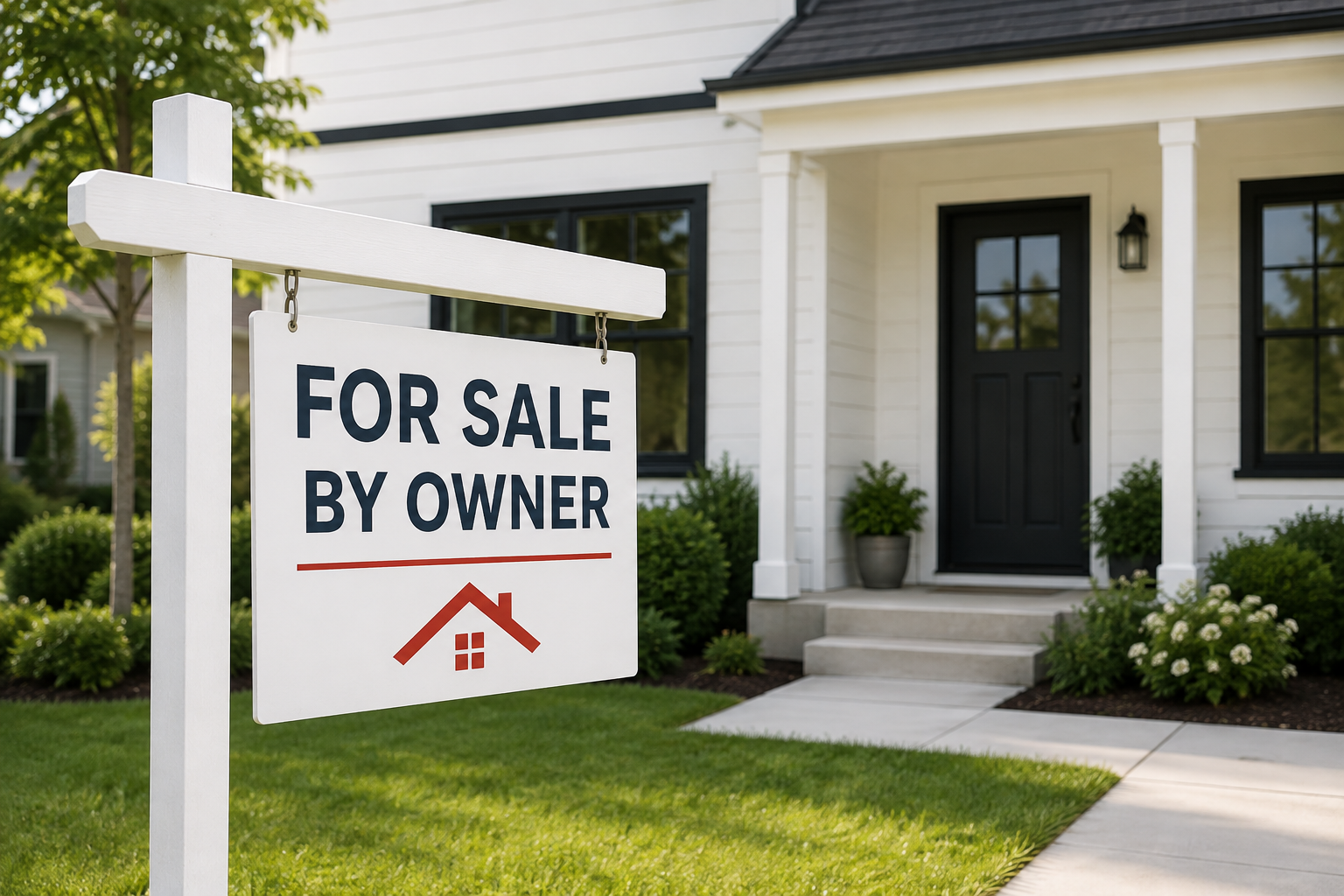
If you're thinking about selling your house yourself, I'm not going to talk you out of it. Sometimes it's the right call. What I want is for you to make that decision with real information instead of a commission number you saw on a napkin.
So let's look at what actually happens with For Sale By Owner, where it tends to work, and where it tends to get expensive.
Start with the actual numbers
The National Association of Realtors surveys buyers and sellers every year. In recent reports, FSBO sales have made up about 6 to 7% of all home sales, which is at or near the lowest share they've ever recorded.
The number underneath that one matters more. A large chunk of FSBO sellers, somewhere around a third to nearly half depending on the year, sold to someone they already knew. A family member, a neighbor, a tenant, a coworker.
That reframes the whole conversation. FSBO isn't usually "I marketed my home to the open market and beat the pros." It's usually "I already had a buyer and didn't need marketing."
You'll also see a stat floating around that FSBO homes sell for a lot less than agent-assisted homes. That gap is real in the survey data, but I'm not going to hand it to you as proof of anything, because it isn't apples to apples. FSBO homes skew smaller, more rural, and lower priced, and a chunk of them are those known-buyer deals where the price was decided over dinner. The gap tells you something. It doesn't tell you what your specific house would have done.
When FSBO is a reasonable call
You already have your buyer. This is the big one. If your brother-in-law wants the house, or your renter wants to buy it, you don't need exposure. You need a good contract and a good title company. Paying a full commission for a deal that already exists doesn't make sense, and honestly, most agents worth their license will tell you that.
It's a simple, cash, investor-to-investor deal. Two people who both do this for a living, no financing, no appraisal, short timeline. Fine.
You genuinely have the time. Not "I have some evenings free." I mean the flexibility to answer a call at 1pm on a Tuesday because someone wants to see it at 3pm, and to do that for however many weeks it takes.
You're comfortable with contracts and deadlines. Utah's purchase contract runs on hard dates. Due diligence, financing and appraisal, settlement. If those dates don't scare you, that's a point in your favor.
Where FSBO usually gets expensive
Pricing blind in a non-disclosure state
Utah does not make sale prices public record. That's the single biggest thing working against a FSBO seller here, and most people don't find out until they're already listed.
In a disclosure state, you can look up what your neighbor's house actually closed for. In Utah, you can't. County records show the transfer, not the price. Which means the automated value estimates you're pulling from public sites are working with incomplete data on Utah homes specifically. They're guessing at the exact number your entire sale hinges on.
Three things sell a house. Location, price, and condition. You can't do anything about location, and you can control condition. Price is the one that's hardest to get right without the closed sales data, and it's the one that costs the most when it's wrong.
I had a seller once who was sure their home was worth about $70,000 more than the data supported. Instead of arguing about it, I paid out of pocket for an independent appraisal so we could all sit down and look at the same number. That's what I mean by pricing on data. The market speaks, and we need to listen, but you have to be able to hear it first.
If you want a starting point before you commit to anything, you can request a free home valuation and go from there.
Exposure
Most buyers are working with an agent, and most of those agents are searching the MLS. A yard sign and a Facebook post reach a real audience, just a smaller one. Fewer eyes usually means fewer offers, and fewer offers usually means less competition working in your favor.
The part after "we have an offer"
Getting an offer is the fun part. What comes after it is where deals live or die.
The inspection comes back with a list. The appraisal comes in under contract price. The buyer's lender goes quiet for six days. The buyer wants a seller-paid rate buydown. Somebody misses a deadline and now you're negotiating an addendum you didn't plan on.
This is where I spend most of my energy on a transaction, and it's the part nobody pictures when they're thinking about saving a commission. On one deal where rates jumped after my clients were already under contract, I went back to the builder mid-contract and got $140,000 knocked off the price. That's not a listing skill. That's a negotiating and deadline-management skill.
Buyer agent compensation is a decision now, not a default
Since the industry practice changes took effect in August 2024, buyer agent compensation isn't advertised on the MLS and buyers sign written agreements with their agents up front. As a FSBO seller, you'll still get asked, because a buyer's agent isn't going to bring you a client without knowing whether they're getting paid.
You have options. You can offer something, offer nothing, or handle it as a concession in the contract. What you can't do is skip the question, and how you answer it affects how many agents bring you buyers.
What I'd lock down if you're doing it anyway
If you've read all that and FSBO still fits your situation, good. Here's what I'd want you to have in place:
- A real number. Pay for an appraisal, or find a broker who will run you an honest CMA even knowing you're going it alone. Some of us will. Just ask.
- Written disclosures. Utah sellers have to disclose known material defects. Get it in writing, keep a copy, and don't get cute about it. This is the piece with the longest tail of liability.
- A title company lined up early. They'll handle escrow, the title search, and the closing documents, and a good one will tell you when something looks off.
- A written answer on buyer agent compensation before your first showing, not during your first negotiation.
- Proof of funds or a real pre-approval from every buyer, from a lender you can actually call. Not a screenshot.
- Professional photos. Non-negotiable. Most buyers decide whether to see your home from a phone screen.
- A deadline calendar the day you go under contract, with every date from the contract written on it.
The middle ground people forget about
It isn't all or nothing. There's a wide space between full service and completely on your own.
Some brokers will do consulting hourly, or contract review only, or help you through just the negotiation. And commission has always been negotiable. I've adjusted mine before when the situation called for it, including giving up a full point on one sale so my clients could buy down their buyer's rate and get the deal closed.
If the number is what's holding you back, say the number out loud to an agent and see what happens. The worst case is they say no.
The honest bottom line
If you already have your buyer, FSBO is often the smart move and I'd tell you that to your face.
If you're planning to market your home to strangers, price it without access to closed sales data in a state that doesn't publish them, and manage the contract on your own, then you're taking on real risk to save a number that may or may not end up in your pocket. Sometimes it works out. Sometimes the pricing miss or the blown deadline costs more than the commission would have.
My job isn't to tell you what to do. It's to help you understand your options well enough to pick the one that fits your life. There isn't always a perfect answer, but there's usually a best-fit answer.
Common questions about selling by owner in Utah
Can I legally sell my house without a realtor in Utah?
Yes. Utah has no requirement that a seller be represented. You can market, negotiate, and close on your own. The legal risk isn't in doing it, it's in the disclosure and contract pieces, which is where a real estate attorney earns their fee.
Do I have to pay the buyer's agent if I sell FSBO?
No, but you have to answer the question. Since the practice changes in August 2024, buyers sign written agreements with their agents up front, so an agent will ask what you're offering before they bring a client. You can offer a percentage, a flat fee, a seller concession, or nothing. Offering nothing is allowed and it narrows your buyer pool.
How do I price my home myself in Utah?
This is the hard part here. Utah doesn't publish sale prices in public records, so you can't look up what comparable homes closed for, and automated estimate tools are working with incomplete data on Utah properties. Your realistic options are paying for an appraisal or asking a broker to run you a CMA.
Can I get my home on the MLS without hiring a full-service agent?
MLS access runs through a licensed broker, and what a broker can and can't do for you is governed by the MLS's own rules. If a reduced-service arrangement is what you're after, ask a broker directly what's permitted. Don't assume a service you saw advertised in another state is available here.
What do I have to disclose when selling my own home in Utah?
Utah sellers must disclose known material defects regardless of whether an agent is involved. Put it in writing, keep a copy, and don't leave things out because you're hoping nobody notices. Undisclosed defects are the most common way a private sale turns into a problem after closing.
Do FSBO homes really sell for less?
The survey data shows a gap, but it isn't a clean comparison. FSBO homes skew smaller, more rural, and lower priced, and many are sold to a buyer the seller already knew at a price agreed on privately. The gap is real. What it doesn't tell you is what your specific home would have done.
This article is for general informational purposes only and is not legal, tax, or financial advice. Real estate commissions are fully negotiable and are not set by law or by any industry organization. Disclosure obligations, contract requirements, and MLS rules vary and change over time. Consult a qualified real estate attorney, tax professional, or licensed agent for guidance specific to your situation.
A CMA is not an appraisal and should not be used as one. A formal appraisal can only be performed by a licensed appraiser.
Sources: National Association of Realtors, Profile of Home Buyers and Sellers; National Association of Realtors, Facts About the NAR Settlement.
Kat Ashby is the Principal Broker at RootQuest Realty LLC in Saratoga Springs, Utah, representing both buyers and sellers across Saratoga Springs, Eagle Mountain, Lehi, and Utah County. She is bilingual in English and Portuguese and works with Altair Global on corporate relocation. License #10382396-PB00.