


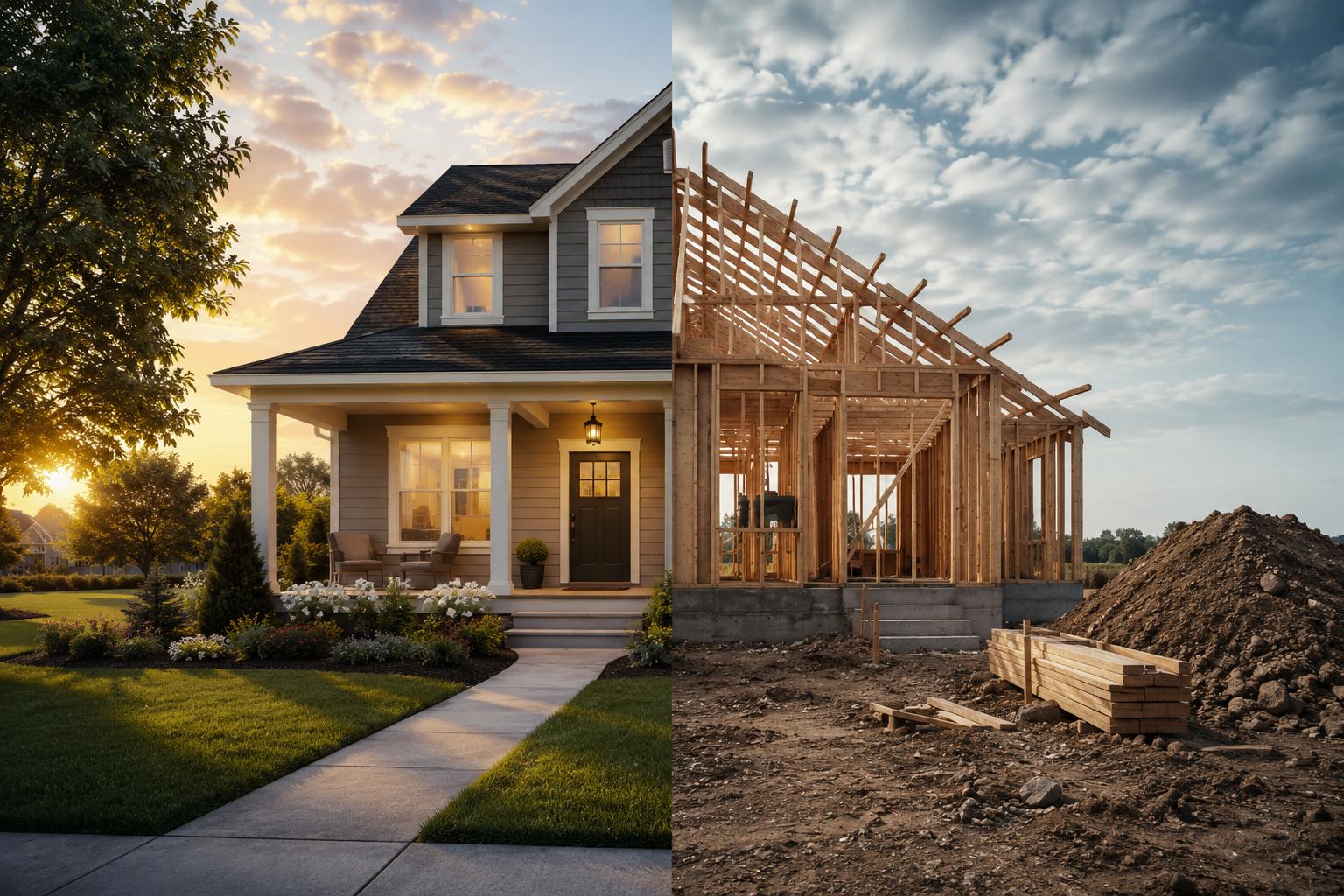
When you walk into a model home in Eagle Mountain or Saratoga Springs, the builder's rep will typically show you two paths: build from the ground up, or buy a quick move-in that's already finished or nearly done. Both are new construction. Both come with a builder warranty. But they're very different decisions — and the right one depends entirely on your timeline, your priorities, and how much the details matter to you.
Here's the honest breakdown.
What "Build From Dirt" Actually Means
Building from dirt means you choose the lot, choose the floor plan, work through a design center to select finishes and upgrades, and then wait while the home is constructed. You're buying a promise, not a product.
According to the U.S. Census Bureau, the average time to complete a new single-unit home is approximately eight months — but supply chain disruptions and labor shortages have pushed many builds to 12–18 months in recent years. In Utah County's active construction market, timelines vary by builder and community.
What you control:
- Lot selection — cul-de-sac, backing to open space, proximity to parks or schools
- Floor plan — bedroom count, layout, loft vs. bonus room configuration
- Finishes — flooring, cabinets, countertops, fixtures, exterior color
- Structural options — finished basement, extended garage, RV bay, covered patio
As Campbell Homes explains: "With a new build home from dirt, you will choose the plan, the lot, and all of the options and upgrades you desire." That level of control is the defining advantage.
What you don't control: the timeline. Weather delays, permit backlogs, subcontractor scheduling, and material availability all affect when your home is actually ready.
The Rate Risk That Catches Build-From-Dirt Buyers Off Guard
A to-be-built contract locks in your purchase price — but not your interest rate. If your build takes 8–12 months and rates move meaningfully in that time, your monthly payment changes even though your purchase price didn't.
In a rate environment that has shifted 0.5–1.0% within a single year multiple times since 2020, an 8–14 month build timeline represents genuine exposure. You may have qualified comfortably at contract — and find the payment harder to absorb at closing if rates have risen.
What to ask: Does the builder offer a rate lock or float-down protection for the construction period? Some builders have preferred lenders with extended rate lock products built for new construction timelines. As I covered in my rate buydown guide, builder incentives and lender programs can meaningfully reduce this risk — but understand the conditions before you commit.
The design center reality: Upgrade selections are marked up significantly by builders. Without professional guidance, it's easy to exceed your budget significantly at the design center. Know your total budget before you sit down, not after you've fallen in love with a finish package.
Why So Many Builders Shifted to Quick Move-Ins After 2020
Before 2020, building from dirt on a buyer contract was the standard model for most Utah County production builders. Then the supply chain collapsed. Lumber, windows, appliances, garage doors — all of it became unpredictable. Builders who started homes on buyer contracts couldn't give reliable completion dates. Some quoted 8 months and delivered at 18.
The industry response was a structural shift toward building inventory speculatively — starting homes before a buyer is under contract, so the builder controls the timeline and materials without the pressure of a committed buyer waiting. Today, a significantly larger share of new construction in Eagle Mountain and Saratoga Springs is built on the quick move-in model than it was five years ago.
What this means for you: there is genuinely more quick move-in inventory available now than before the pandemic — including homes at various stages of completion. That's an opportunity. It also means that if you have specific needs that aren't met by available inventory, building from dirt may require more patience than it once did.
What a Quick Move-In Actually Is
A quick move-in (also called a spec home, move-in ready, or inventory home) is a home the builder started without a specific buyer — either because a previous buyer fell through or because the builder builds inventory speculatively to sell quickly. It's finished or nearly finished when you buy it.
As Rockford Homes notes in their 2026 buyer guide, the home-buying process for quick move-ins is significantly more streamlined — "buyers can focus on finalizing their finances and preparing for the move, rather than managing a lengthy construction process."
Closing timelines on quick move-ins are typically 30–60 days. You see exactly what you're getting before you sign. No surprises at the design center, no waiting to see if the tile you chose looks right in context.
Choosing Finishes vs. Living With What's Built In
With a to-be-built, you spend a day in the design center choosing every finish. It's exciting — and it's where many buyers significantly overspend.
With a quick move-in, those choices are already made. Here's the reframe: paint is cheap. Lighting fixtures are swappable. Hardware is a weekend project. The structural elements — floor plan, lot, square footage, garage configuration — are the ones that are actually hard to change. If those work, the finishes are solvable.
There's also a real upside to finishes already being in: they're already appraised. A quick move-in with upgrades built in has those upgrades reflected in the appraised value. With a to-be-built, every upgrade you add at the design center increases your purchase price — and the appraisal has to support it. As I covered in my Utah County home sale roadblocks guide, appraisal gaps are one of the most common deal-killers in new construction.
The Negotiating Reality on Sitting Inventory
Builders need to move through inventory. A completed home sitting on the builder's books isn't generating revenue — it's consuming it through carrying costs: property taxes, insurance, utilities, and opportunity cost. That urgency is your leverage.
Quick move-ins that have been sitting 60, 90, or 120+ days are where real negotiation happens. Builders in this position are typically willing to offer rate buydowns, closing cost contributions, appliance packages, or price adjustments — especially toward the end of a quarter when builders are managing numbers. As GTM Builders' Utah guide explains, ready-to-move homes allow buyers to take advantage of builder incentives that aren't typically available on to-be-built contracts.
Ask your agent what the home's days on market is, and use it.
On r/FirstTimeHomeBuyer, buyers who chose quick move-ins describe the same experience: "The design wasn't exactly what I would have chosen, but we closed in 45 days, locked a rate buydown, and got $15,000 in closing costs covered. We painted two rooms and it felt like ours immediately."
The Decision Framework
Choose build from dirt if:
Your timeline is flexible. If you have 8–14 months before you need to move and no hard deadline, a to-be-built gives you something a quick move-in cannot: a home designed around how you live.
The details matter to you. If you need a main-floor bedroom, a specific garage configuration, or a basement layout that has to work a certain way — and those details aren't available in existing inventory — building from dirt may be the only path.
You want your lot. Backing to open space, a south-facing yard, proximity to a specific trail — lot selection is only available when you build from the ground up.
You're not coordinating a complex move. Building from dirt is least stressful when you're currently renting or in a flexible housing situation.
Choose a quick move-in if:
You have a firm timeline. Job relocation, school year start, lease expiration — any hard deadline makes a quick move-in the practical choice. As Rockford Homes puts it, for buyers facing time constraints, quick move-ins "provide a ready solution" that to-be-built homes cannot.
Rate certainty matters to you. With a quick move-in closing in 30–60 days, you can lock your rate with confidence. There's no 12-month window for rates to move against you.
You want to negotiate. Builders sitting on completed inventory are motivated. To-be-built contracts at full price are the builder's preference — a quick move-in with a rate buydown and closing cost contribution is often a better deal for the buyer.
You're selling your current home simultaneously. The certainty of a 45-day close is dramatically easier to coordinate with a home sale than a timeline that can shift by weeks or months. As I covered in my sell and buy timing guide, the construction timeline is one of the most important variables to align when selling and buying simultaneously.
Quick Reference
| Build From Dirt | Quick Move-In | |
|---|---|---|
| Timeline | 8–18 months | 30–60 days |
| Customization | Full — lot, plan, finishes | None — builder's choices |
| Rate risk | High — rate may rise before closing | Low — lock quickly |
| Price negotiation | Limited | More flexibility |
| Finishes | You choose | Already appraised in |
| Best for | Flexible timelines, specific needs | Hard deadlines, rate certainty |
One More Thing: Get Your Own Agent Either Way
Whether you're building from dirt or buying a quick move-in, the builder's rep at the model home represents the builder — not you. As I covered in my posts on what Eagle Mountain builder reps won't tell you and the hidden costs of new construction in Eagle Mountain, having your own agent costs you nothing (the builder pays the commission) and gives you an advocate who reviews the contract, flags upgrade markups, and pushes back when something isn't right.
And regardless of which path you choose — get an independent inspection. As I covered in my new construction inspection guide, brand-new does not mean problem-free.
Let's Talk Through Your New Construction Options →
Frequently Asked Questions
What is the difference between building from dirt and buying a quick move-in in Utah County? Building from dirt means you choose your lot, floor plan, and all finishes, then wait 8–18 months for the home to be constructed. A quick move-in is a home the builder has already completed or nearly completed — you close in 30–60 days and get exactly what you see. Both are new construction with builder warranties, but they serve very different buyer situations.
Is a quick move-in or new build better for buyers in Eagle Mountain or Saratoga Springs? It depends on your timeline and priorities. If you have a firm move-in deadline — job relocation, school year, lease expiration — a quick move-in is the practical choice. If your timeline is flexible and you have specific layout, lot, or finish requirements, building from dirt gives you control that inventory homes can't. Most buyers in today's market find quick move-ins offer better negotiating leverage and rate certainty.
What is the rate risk when building from dirt in Utah County? A to-be-built contract locks in your purchase price but not your interest rate. If your build takes 8–12 months and rates rise 0.5–1.0% in that time, your monthly payment increases even though your purchase price didn't. Some builders offer extended rate lock products through their preferred lenders — always ask about this before signing a to-be-built contract.
Can you negotiate the price on a quick move-in home from a Utah County builder? Yes — and more effectively than on a to-be-built. Builders carrying finished inventory have ongoing costs (taxes, insurance, utilities) and strong motivation to close. Quick move-ins that have been sitting 60–120+ days are where rate buydowns, closing cost contributions, appliance packages, and price adjustments happen. Ask your agent for the home's days on market before you negotiate.
Do you need an agent when buying new construction in Utah County? Yes. The builder's rep at the model home represents the builder — not you. Having your own agent costs you nothing (the builder pays the commission) and gives you an advocate who reviews the contract, flags design center markups, and negotiates on your behalf. Never sign a new construction contract without independent representation.
Do you need a home inspection on new construction in Utah County? Always. City code inspections verify code compliance — they are not a quality review. Independent home inspectors regularly find issues in brand-new homes that city inspectors miss. A few hundred dollars for an independent inspection on a $500,000+ purchase is one of the smartest things a buyer can do.
Related reading:
- What Eagle Mountain Builder Reps Won't Tell You
- Hidden Costs of New Construction in Eagle Mountain
- New Construction Inspection in Saratoga Springs: Yes, You Need One
- Buying New Construction in Eagle Mountain? There May Be a Hidden Tax (PID)
- Is a Rate Buydown Worth It in Utah County?
- How to Sell Your Saratoga Springs Home and Buy Another One at the Same Time
Sources: U.S. Census Bureau — Average time to complete a new single-unit home; Campbell Homes — New Build vs. Available Soon, April 2025; Rockford Homes — New Build vs. Quick Move-In, February 2026; GTM Builders Utah — Ready to Move vs. Under Construction, January 2026; LendingTree — New Construction vs. Existing Home, February 2026; Nerdbot — New Construction Homes Pros and Cons, February 2026.
Written by Kat Ashby, Principal Broker and Realtor® at RootQuest Realty LLC in Saratoga Springs, Utah. Kat holds a Utah Division of Real Estate Principal Broker license (Credential #10382396-PB00) — a designation that requires demonstrated experience, additional coursework, and a separate licensing exam beyond the standard agent license. She has been actively selling in Utah County since 2020, with deep experience across Lehi, Eagle Mountain, Saratoga Springs, and the broader Wasatch Front, specializing in buyer representation, new construction, and corporate relocation through Altair Global. She is fluent in English and Portuguese, earned her bachelor's degree in Psychology from Brigham Young University, and lives in the community she sells in.